
PESTEL Analysis of France (2026): the ballast economy
A PESTEL analysis of France in 2026 — four prime ministers in two years, a live one-notch split between rating agencies, and an industrial programme none of the churn has touched.
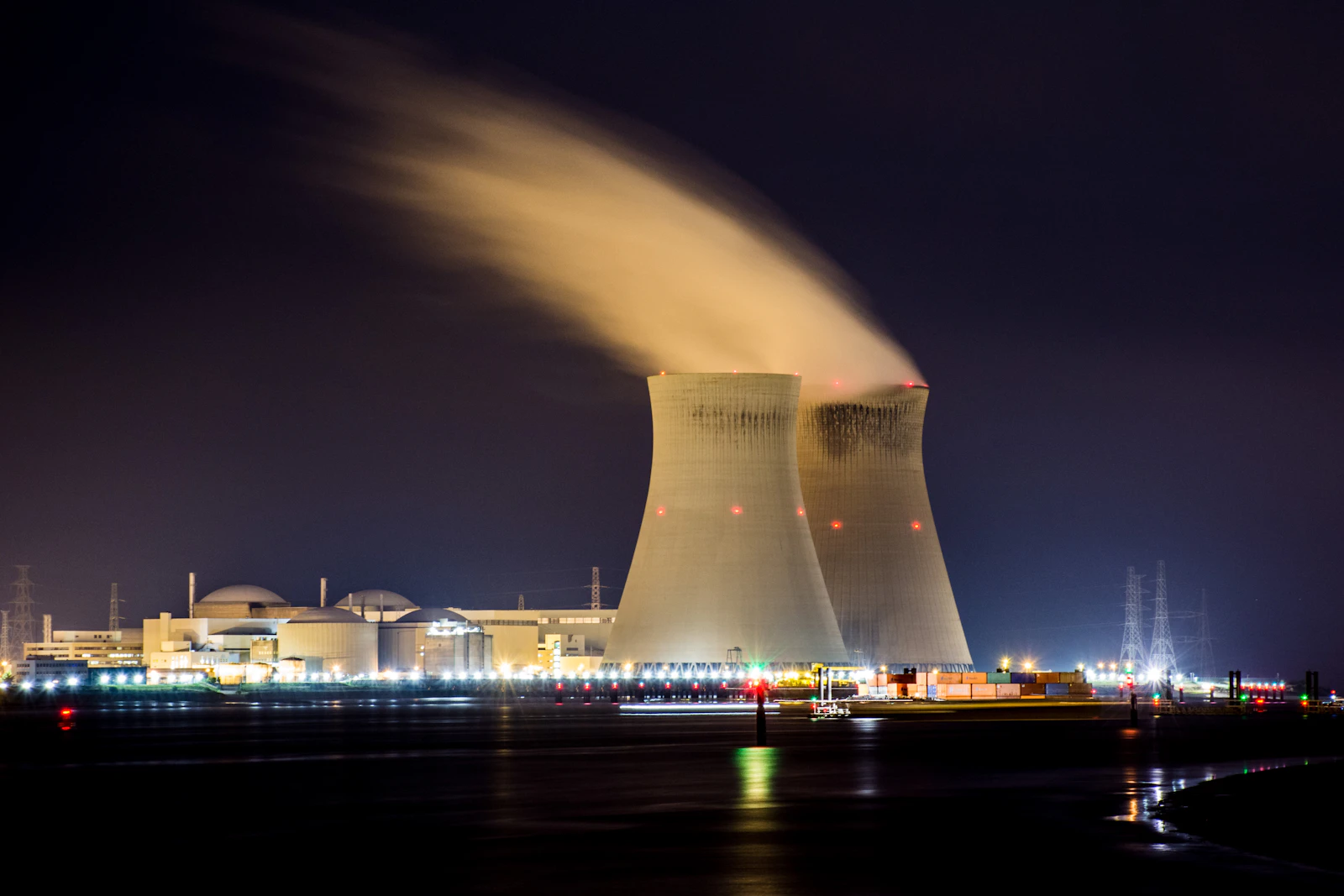
The standard PESTEL of France writes itself, and it is wrong in an interesting way. Political: unstable, four prime ministers, ungovernable Assembly. Economic: stagnant, over-indebted, downgraded. Social: strikes, protests, an unpopular retirement age. Conclusion: a difficult, high-risk market. Every one of those clauses is defensible on its own, and the analysis they add up to would have told you to avoid the country that is currently building Europe's largest AI compute base on the cheapest low-carbon electricity on the continent.
The error is not in any single cell. It is in the assumption that the cells move together. PESTEL scans six external macro forces — Political, Economic, Social, Technological, Environmental, Legal — around an entity, and the implicit expectation is that a country in political crisis will show that crisis propagating outward. France in September 2026 does not do that. It splits.
This is a third distinct shape in the country series. The PESTEL analysis of the USA (2026) found one force structurally holding up the other five. The PESTEL analysis of Canada (2026) found one force rewriting the other five. France shows neither: it shows two forces churning violently while two others sit completely still, with a clean, identifiable mechanism separating them.
Position being analyzed
The decision this analysis is built for: should a firm treat French political instability as a reason to discount a multi-year industrial or energy commitment in France?
That is the live question, because the headline evidence for "yes" is overwhelming and the answer is still mostly no. Getting there requires scanning the six cells separately rather than letting the loudest one set the score.
| Indicator | Latest reading | As of |
|---|---|---|
| Prime ministers since snap elections | 4 | Sept 2026 |
| Real GDP growth, 2026 forecast | 0.7% (Banque de France: 0.5%) | June 2026 |
| Public deficit target | 5% of GDP | end-2026 |
| Public debt trajectory | 121% of GDP by 2027 | 2026 forecast |
| Sovereign rating | A+ (Fitch, S&P) / Aa3 (Moody's) | Aug 2026 |
| Unemployment rate | rising to ~8.3% | 2026 |
| Statutory retirement age | frozen at 62y 9m | 1 Sept 2026 |
| Nuclear power committed to data-centre co-location | 3 GW | 2026 |
Political — churn at the top of a system that keeps running
France has had four prime ministers since President Macron called snap legislative elections in June 2024, and the reason is arithmetic rather than scandal: the elections returned an Assembly divided into three roughly equal blocs, none able to form a working majority. Michel Barnier and François Bayrou were both brought down by budgets, and Sébastien Lecornu inherited the same problem.
He solved it the only way the constitution allows. The 2026 budget took roughly four months of deadlock, required Article 49.3 — which passes a bill without a vote — three times, and then had to survive the censure motions that 49.3 automatically invites. It did, on 2 February 2026. The left-led motion from La France Insoumise, the Greens and the communists reached 260 of the 289 votes needed to bring the government down. The National Rally's separate motion drew 135. The margin was 29 votes, and the reason it existed at all was that the Socialist Party abstained in exchange for budgetary concessions.
Two things follow, and they point in opposite directions. The government is one defection away from falling, and the 2027 presidential election — for which Macron is term-limited — will make every subsequent budget harder. But the budget also passed, with a military spending increase in it, which is not what an ungovernable state looks like.
Score: adverse, high volatility.
Economic — weak, expensive, and not disorderly
The forecasts have converged on a genuinely poor number. INSEE, the OECD and the IMF cluster around 0.7% growth in 2026, down from 0.9% in 2025, with 2027 barely better at 0.8%. The Banque de France is more pessimistic still at 0.5%. The proximate cause is external: conflict in the Middle East pushed energy prices up, the resulting inflation is eroding household purchasing power, and business investment is being held back by uncertainty.
The fiscal position is the harder problem. The deficit target is 5% of GDP for 2026 — a target, not an achievement, and one that assumes consolidation continues and energy support stays contained. Debt was 113.2% of GDP in 2024 and is projected to reach 121% by 2027 and keep rising toward 122% by 2028, diverging from the euro-area average. The European Commission's assessment is blunt about the arithmetic: the fiscal stance tightens by roughly 1.5% of GDP over 2026-27, and that is not enough to stabilise the debt ratio.
What this cell is not is a crisis. France borrows at manageable spreads, the budget passed, and the deficit is falling. It is a slow, compounding deterioration with no visible mechanism for reversing it — which is a different risk with a different time constant.
Score: adverse, low volatility.
Social — the cell where the political churn actually landed
If you want to see what the hung parliament cost, this is where to look.
Macron's 2023 pension reform — raising the retirement age toward 64 — was his flagship structural reform and the most politically expensive thing he did. In November 2025 the National Assembly voted overwhelmingly to suspend it, and the suspension was carried in the 2026 social security budget adopted that December. It was the concession that bought the Socialist Party's abstention and kept the government alive.
The suspension became operative for pensions taking effect from 1 September 2026 — the day before this analysis was written. It freezes the statutory retirement age at 62 years and 9 months. The direct cost is €400 million in 2026 and €1.8 billion in 2027. France's public auditor has estimated that making the suspension permanent would cost around €20 billion a year — roughly 0.5% of GDP — by 2035, and add 3 to 4 percentage points of GDP to public debt over the decade.
Underneath it, the labour market is softening: unemployment is rising toward 8.3% in 2026 from 7.9% in late 2025.
Note the coupling that PESTEL makes visible and a SWOT would hide: the Social cell did not deteriorate for social reasons. It deteriorated because it was the only cell with something valuable enough to trade for parliamentary survival — and the cost lands in the Economic cell.
Score: adverse, high volatility.
Technological — the cell that never got the memo
Across the same two years, four governments, and three rating actions, France has become the centre of European AI.
Mistral AI, founded in 2023, was valued at €11.7 billion in its September 2025 Series C and was reported in mid-2026 to be in talks to raise around €3 billion at roughly a €20 billion valuation — a figure reported as in-negotiation rather than closed, and worth treating as such. In March 2026 it secured $830 million specifically for data-centre expansion in the Paris area. France has attracted around €109 billion in private AI investment commitments, and the state's endorsement has been unusually direct, up to and including Macron publicly recommending Mistral's Le Chat over ChatGPT.
The most telling item is the EDF–Mistral partnership signed on 28 May 2026: a five-year agreement applying AI to EPR2 reactor engineering, maintenance and construction, with the explicit condition that data remains EDF's property on sovereign cloud or EDF-owned infrastructure. That is the state-owned nuclear utility and the national AI champion contracting with each other on digital-sovereignty terms — an arrangement that requires no parliamentary majority whatsoever.
Score: favourable, low volatility.
Environmental — a structural advantage measured in terawatt-hours
France's nuclear fleet is the reason the Technological cell is possible, and it is the country's least contested asset.
At the World Nuclear Energy Summit in Paris in March 2026, Macron said France had exported 90 terawatt-hours of decarbonised electricity in the previous year — surplus low-carbon power, sold abroad, in a continent where power is the binding constraint on AI buildout. EDF has committed 3 GW at nuclear sites for data-centre co-location, which is the specific thing hyperscalers cannot get in most of Europe, and its long-term pricing arrangement carries a €70/MWh ceiling for nuclear output from 2026.
Two honest qualifiers. The ARENH procurement mechanism, which has governed third-party access to nuclear output for over a decade, ends in 2026, and the transition to what replaces it is a live commercial question. And the EPR2 new-build reactors do not come online until the 2030s, while the data-centre commitments want power this decade. France's advantage over that gap rests on the existing fleet's output and lifetime extensions, not on new capacity.
Score: favourable, low volatility.
Legal — stable domestically, loosening at the EU level
The domestic layer is the familiar one: a 35-hour statutory workweek, and comprehensive statutory coverage of overtime, annual leave, sick leave, parental leave and sabbaticals. It is rigid, it is priced into every French labour cost model, and it has not changed.
The layer that moved is European, and it moved in France's favour. The EU AI Act's transparency obligations under Article 50 became applicable on 2 August 2026, with systems placed on the market before that date given until 2 December 2026 to comply. But the high-risk obligations, originally due the same day, were deferred: the AI Act Omnibus — politically agreed 7 May 2026, published in the Official Journal 24 July, in force 27 July 2026 — pushes provider and deployer obligations for standalone Annex III high-risk systems to 2 December 2027, and for AI embedded in products under Annex I to 2 August 2028.
For a country staking an industrial strategy on AI, an eighteen-month regulatory reprieve at the exact moment of buildout is a material tailwind — and one delivered entirely outside the French parliament.
Score: neutral-to-favourable, low volatility.
PESTEL scorecard for France, September 2026
| Force | Direction | Volatility | The single fact that sets it |
|---|---|---|---|
| Political | Adverse | High | Four PMs since June 2024; budget survived censure by 29 votes |
| Economic | Adverse | Low | Debt to 121% by 2027; tightening insufficient to stabilise it |
| Social | Adverse | High | Pension reform suspended, effective 1 September 2026 |
| Technological | Favourable | Low | EDF–Mistral five-year AI partnership, 28 May 2026 |
| Environmental | Favourable | Low | 3 GW nuclear committed to data-centre co-location |
| Legal | Neutral/favourable | Low | AI Act high-risk obligations deferred to Dec 2027 / Aug 2028 |
Read the volatility column rather than the direction column and the structure jumps out. The two high-volatility cells are Political and Social. The four low-volatility cells include both adverse ones and both favourable ones. Instability in France is not distributed across the scan — it is concentrated in exactly two places.
The Ballast Test
Most country scans treat a change of government as a shock to the whole grid. It usually is not. The useful question is narrower, and it is countable:
The Ballast Test — during the scan window, list the policy commitments that survived every change of government, and the ones that did not. The survivors are your planning baseline. The casualties are your risk register. Then find what separates the two lists, because it is almost never importance.
France between June 2024 and September 2026 is close to a controlled experiment: same country, same external environment, four governments.
| Commitment | Survived all four governments? | Instrument it depends on |
|---|---|---|
| EPR2 nuclear new-build programme | Yes | State-owned utility, multi-decade contracts |
| France 2030 / AI investment agenda | Yes | Executive programme, private capital |
| EDF 3 GW data-centre co-location, €70/MWh ceiling | Yes | Commercial contract |
| Military spending increases | Yes — increased in the 2026 budget | Executive priority, cross-bloc support |
| EU-level obligations (AI Act, deficit procedure) | Yes | Supranational law |
| 2023 pension reform (retirement age to 64) | No — suspended | Ordinary legislation, needs the Assembly |
| Barnier government | No — fell on a budget | Confidence of the Assembly |
| Bayrou government | No — fell on a budget | Confidence of the Assembly |
| The original deficit trajectory | No — repeatedly slipped | Annual finance bill, needs the Assembly |
The separator is not sector, not importance, and not popularity. Everything in the casualty list required a parliamentary majority. Nothing in the survivor list did. France's hung Assembly is a precise instrument: it can destroy a pension reform and two governments, and it has no mechanism at all for touching EDF's commercial contracts, a state investment programme, or a supranational directive.
That is what makes the standard read wrong. "Political instability" is not a scalar that discounts every French commitment equally. It discounts, sharply, anything whose delivery route passes through the Assembly — statutory reform, tax rates, social policy, the deficit path. It barely touches anything delivered through the executive, a state-owned enterprise, a commercial contract, or Brussels.
The Ballast Test is the inverse of the Reversal Test introduced in the Canada analysis. Canada's scan counted what a government had withdrawn and found the reversals clustered in four of six cells — a country where the policy baseline is unreliable across the board. France's scan counts what survived and finds the survivors clustered by constitutional instrument. Same six cells, same question, opposite finding: Canada's instability generalises and France's does not.
The Argentina analysis runs the same instrument sort forward instead of back, as the Lock-In Ladder, and finds the ranking inverted: when the threat is a new president rather than a hung Assembly, executive policy is the weakest instrument, not the strongest.
The split notch
There is a second, smaller finding that most France commentary flattens, and it bears directly on the test above.
The usual summary is that France was downgraded three times in about a year. That count is defensible — Fitch cut France from AA− to A+ on 12 September 2025, S&P followed to A+ on 18 October 2025, and DBRS also cut — but stating it as a bare count implies unanimity that does not exist. Moody's did not downgrade. On 24 October 2025 it affirmed France at Aa3 — the equivalent of AA−, one notch above A+ — and changed only the outlook to negative. Fitch subsequently affirmed A+ with a stable outlook on 28 August 2026.
So France carries a live one-notch split: AA−-equivalent at Moody's, A+ at Fitch and S&P. The split is not noise, because Moody's said what would resolve it. Its outlook could return to stable, it wrote, if the difficulties in France's legislative institutions prove temporary, or if there is a resumption of pension reforms.
Those are the two conditions, and they map exactly onto the two high-volatility cells in the scorecard. One of them has since been decided: the Assembly did not resume pension reform, it suspended it, effective 1 September 2026. The optimistic case now rests entirely on the first condition — on the hung parliament being a passing phase rather than the shape of French politics through 2027 and beyond.
Counter-argument: doesn't the fiscal cell eventually reach the ballast?
The strongest objection to everything above is that the wall between the two groups is not permanent, only slow. Debt heading to 121% of GDP with an insufficient consolidation path does eventually constrain state investment capacity, and France 2030, EPR2 and EDF's balance sheet are all ultimately state-adjacent. On a long enough horizon, the Economic cell does reach the ballast.
That is correct, and it is the right reason to bound the claim rather than abandon it. Three things bound it. First, the transmission is slow — fiscal deterioration reaches an already-contracted 3 GW co-location commitment over years, not budget cycles. Second, the direction of travel in the ballast cells is currently favourable, and rising: AI capital is arriving, not leaving. Third, the deficit is falling even in this parliament, which is weak evidence that the constraint binds gradually rather than abruptly.
The honest formulation is that the Ballast Test tells you which commitments are exposed to the next two years of French politics, not which are exposed forever. It is a horizon-scoping tool, and the horizon it scopes is the one most market-entry and capital-allocation decisions actually run on.
Key takeaway
France in September 2026 fails the test most country PESTELs implicitly apply — "is this a politically stable place to commit capital?" — and passes the test that actually matters, which is narrower: is the specific thing I am committing to exposed to the instability?
For a firm weighing a multi-year French commitment, the operational conclusion is specific. Anchor on what the Ballast Test shows surviving — the nuclear fleet's output and its contracted pricing, EDF's co-location capacity, the AI capital base, EU-level regulatory timelines — and treat as provisional anything delivered by statute: tax rates, social charges, retirement age, sector levies, and the deficit path they fund. A power purchase agreement with EDF and an assumption about French payroll taxes in 2029 are not the same class of risk, and the standard "political instability" discount prices them identically.
The two dates that will most cheaply update this analysis are the passage of the 2027 budget — the first to be negotiated under the shadow of the presidential election — and the resolution of the ARENH successor arrangement, which determines whether the €70/MWh nuclear ceiling survives the mechanism that produced it.
Want to run a PESTEL on your own market? Framework for iPhone & iPad ships a PESTEL worksheet with all six forces and AI assistance for the scan.
Want to go deeper
- PESTEL framework — the six forces, and how to score them
- How to do a PESTEL analysis — the step-by-step method
- PESTEL analysis of the USA (2026) — one force holding up the other five
- PESTEL analysis of Canada (2026) — one force rewriting the other five, and the Reversal Test
- PESTEL analysis of Germany (2026) — six cells that all contain enacted policy, and the Disbursement Gap that dates when each one lands
- PESTEL analysis of the European Union (2026) — six cells governed by different governments, and the Competence Test: score each cell only at the level that holds the lever
- PESTEL analysis of China (2026) — six cells that each return two readings with opposite signs, and the Two-Ledger Test: score the production reading and the household reading separately and route each to the decision it governs
- PESTEL vs Porter's Five Forces — when the macro scan is the wrong tool
Cover photo: Nicolas HIPPERT on Unsplash.
Sources
- Courthouse News Service — "French PM Lecornu rams 2026 budget through parliament after months of turmoil"
- Al Jazeera — "France adopts 2026 budget after two no-confidence votes fail" (2 February 2026)
- France 24 — "Delayed French 2026 budget finally through, paves way for Macron's military spending boost"
- Banque de France — "Macroeconomic projections, June 2026"
- OECD — "France: OECD Economic Outlook, Volume 2026 Issue 1"
- European Commission — "Economic forecast for France"
- S&P Global Ratings — "France Ratings Lowered To 'A+/A-1' From 'AA-/A-1+'"
- Euronews — "Fitch downgrades France's credit rating amid political crisis" (13 September 2025)
- France 24 — "Moody's keeps France's credit rating but warns about negative outlook" (25 October 2025)
- Bloomberg — "Fitch Keeps France's A+ Credit Rating Stable Despite Fiscal, Political Risks" (28 August 2026)
- France 24 — "French lawmakers adopt 2026 social security budget, suspend Macron's flagship pension reform"
- Euronews — "France's National Assembly overwhelmingly votes to suspend controversial pension reform" (12 November 2025)
- Courthouse News Service — "France's government suspends pensions reform in new budget bill"
- EDF — "EDF and Mistral sign a partnership agreement for AI serving nuclear power and digital sovereignty" (28 May 2026)
- Data Center Dynamics — "Vive la révolution: The inside story of the big French AI data center build-out"
- TechCrunch — "Mistral is rumored to be raising €3B at €20B valuation" (12 June 2026)
- Latham & Watkins — "AI Act Update: EU Resolves to Change Rules and Extend Deadlines"
- Norton Rose Fulbright Data Protection Report — "The EU AI Act – when does it become enforceable now?" (July 2026)
Frequently asked questions
Is France politically stable in 2026?
Not at the level of governments, and unusually stable at the level of industrial policy — which is why a single 'stable / unstable' verdict is the wrong output. Sébastien Lecornu is the fourth prime minister since President Macron called snap legislative elections in June 2024, which returned an Assembly split into three roughly equal blocs with no working majority. Two of his predecessors, Michel Barnier and François Bayrou, were brought down by budgets. The 2026 budget itself took roughly four months of deadlock, required Article 49.3 three times, and passed on 2 February 2026 only after two censure motions failed — the left-led motion reached 260 of the 289 votes needed, and the National Rally's separate motion drew 135. But over the same window the EPR2 nuclear new-build programme, the France 2030 investment agenda, EDF's data-centre commitments and rising military spending all continued without interruption. The instability is real and it is confined to the policies that route through the Assembly.
What is France's credit rating in 2026?
It depends which agency you ask, and the disagreement is the informative part. Fitch downgraded France from AA− to A+ on 12 September 2025 and S&P followed to A+ on 18 October 2025, with DBRS also cutting. Moody's did not: on 24 October 2025 it affirmed France at Aa3 — the equivalent of AA−, one notch above A+ — and changed only the outlook to negative. Fitch then affirmed A+ with a stable outlook on 28 August 2026. So France is not uniformly 'A+'. Moody's holds it a notch higher, and when it set out what would restore a stable outlook it named two things: that the legislative difficulties prove temporary, or that pension reform resumes. Parliament has since suspended the pension reform, which resolves one of those two conditions against the optimistic case.
Why did France suspend its pension reform, and what does it cost?
It was the price of governmental survival in a hung parliament. The National Assembly voted overwhelmingly to suspend Macron's flagship 2023 reform in November 2025, and the suspension was carried in the 2026 social security budget adopted that December; the Socialist Party's support for the government was secured through budgetary concessions of which this was the largest. Operationally, the suspension applies to pensions taking effect from 1 September 2026 and freezes the statutory retirement age at 62 years and 9 months rather than continuing the rise toward 64. The costed figures are €400 million in 2026 and €1.8 billion in 2027. France's public auditor has estimated that a permanent suspension would cost around €20 billion a year — roughly 0.5% of GDP — by 2035, and add 3 to 4 percentage points of GDP to public debt over the next decade.
How does France's nuclear fleet affect its AI and data-centre strategy?
It is the one structural advantage that the political churn has not touched, and it is the reason the Technological and Environmental cells score well while Political and Social score badly. Speaking at the World Nuclear Energy Summit in Paris in March 2026, President Macron said France had exported 90 terawatt-hours of decarbonised electricity in the previous year. EDF has committed 3 GW at nuclear sites for data-centre co-location, and its long-term pricing arrangement carries a €70/MWh ceiling for nuclear output from 2026 — predictability that is difficult to obtain in any other large European market. On 28 May 2026 EDF and Mistral signed a five-year partnership applying AI to EPR2 engineering, maintenance and construction, with data remaining EDF property on sovereign infrastructure. The honest qualifier is timing: the ARENH procurement mechanism ends in 2026 and the EPR2 reactors do not come online until the 2030s, while the data-centre commitments want power now.
What does PESTEL show about France that a SWOT does not?
It separates forces that a SWOT would merge into a single 'political risk' threat. France's 2026 scan only becomes legible once Political, Social, Technological and Environmental are written down as four distinct cells, because the pattern is that two of them have churned continuously while the other two have not moved at all — and the dividing line is not sector or importance but constitutional plumbing. A SWOT would have produced one threat bullet reading 'political instability' and one strength bullet reading 'low-carbon energy', and it would have lost the finding that connects them: the same hung parliament that destroyed the pension reform had no mechanism to touch EDF's contracts. That is what the Ballast Test in this analysis counts.