
PESTEL Analysis of Argentina (2026): which reforms are locked
A PESTEL analysis of Argentina in 2026: inflation at 1.7% a month, poverty back up to 32.3%, a tied 2027 runoff, and the Lock-In Ladder for Milei's reforms.
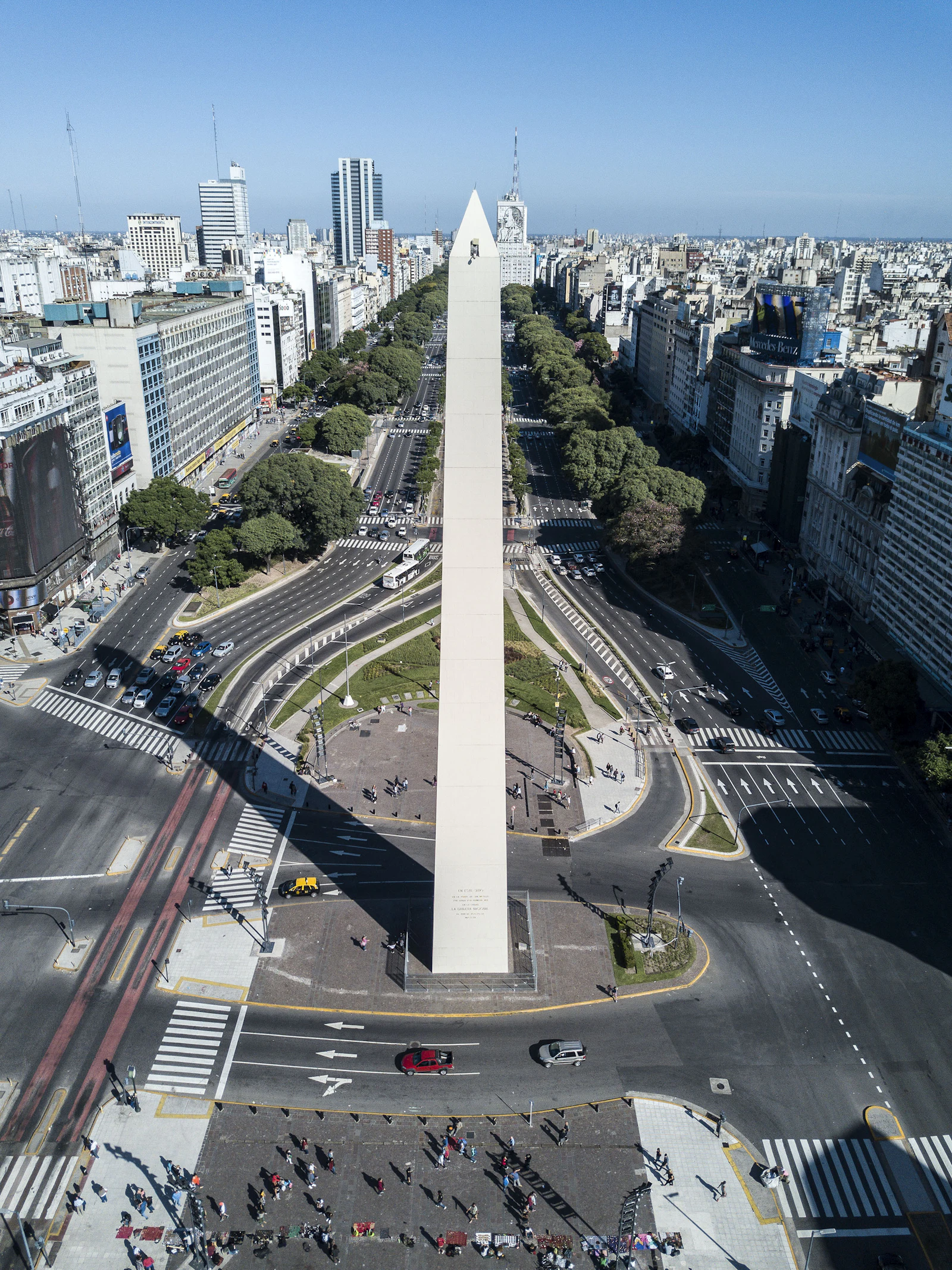
Argentina's monthly inflation fell to 1.7% in August 2026, the lowest reading in 14 months. Two weeks later INDEC published the other number: 32.3% of people in its urban survey were poor in the first half of the year, up from 28.2% six months earlier. Between those two releases, the economy posted its first quarterly contraction since 2024.
Most PESTEL analyses of Argentina would score those cells and stop. That misses the main question about Argentina in 2026. The reforms of 2024-26 are large: a new labour law, a rewritten glacier law, a 30-year investment regime and a trade treaty with the EU. The country votes again on 24 October 2027, and the polls show a tied runoff. A score for each cell means little until you know how easily the next government could undo it.
A PESTEL analysis scans six external macro forces: Political, Economic, Social, Technological, Environmental and Legal. It asks whether each one favours the decision in front of you. This is the ninth country page in the series. The USA had one force holding up the other five. Canada had one force rewriting them. China, India and Mexico had cells that split by ledger, by who can move them and by when you committed. Argentina's cells split by what holds them in place.
Position being analyzed
The decision this analysis is built for: a company deciding in late 2026 whether to commit capital in Argentina whose payback runs past the October 2027 election. That covers most capital: a mine, a plant, a distribution network, a hiring plan.
| Indicator | Latest reading | As of |
|---|---|---|
| Monthly inflation, August 2026 | 1.7% (core 1.8%, regulated prices 2.2%) | INDEC, 10 September 2026 |
| Inflation, year on year / year to date | 33.5% / 21.3% | INDEC |
| GDP, Q2 2026 | −0.6% q/q, first contraction since 2024; +2.0% y/y | INDEC, 17 September 2026 |
| Private consumption, Q2 2026 | −2.4% q/q | INDEC |
| Unemployment, Q2 2026 | 7.9% (from 7.8%) | INDEC |
| Poverty / extreme poverty, H1 2026 | 32.3% / 7.5% (from 28.2% / 6.3% in H2 2025) | INDEC, 24 September 2026 |
| RIGI projects approved | 23, worth US$49.77bn; US$159.48bn under evaluation | Economy Ministry, 2 October 2026 |
| 2026 primary surplus target (IMF programme) | 1.4% of GDP, cut from 2.2% | IMF third review, mission from 21 September 2026 |
| Exports to the US, January-July 2026 | ~US$6bn, +38% | Buenos Aires Times, 31 August 2026 |
| Head-to-head poll, 2027 | Peronism 35.9% / La Libertad Avanza 35.1% | The Rio Times, September 2026 |
Political — a stable government with a tied election ahead
The government passed its two hardest bills in the first half of 2026: the labour reform in February and the glacier reform in April. It also ratified the EU-Mercosur trade agreement by 69 votes to 3 in the Senate. On legislation, 2026 was Milei's strongest year.
His ratings are moving the other way. In September 2026 Zuban Córdoba found 61.8% of respondents viewed him negatively (16-19 September), AtlasIntel for Bloomberg found 58% disapproval, and Universidad de San Andrés found 61%. He still leads first-round voting intention because the opposition is divided. In a straight two-way contest, one poll had Peronism at 35.9% and his party at 35.1%.
Score: favourable to new commitments today, and a coin toss for anything that has to survive October 2027. This is the cell that changes the value of every other cell, which is why the ladder below exists.
Economic — falling inflation, contracting output
Inflation has come down, and that part of the stabilisation is real. Monthly inflation has gone from double digits in late 2023 to 1.7% in August 2026. The peso floats inside an exchange-rate band launched in April 2025, and since January 2026 the band's limits have been adjusted each month for inflation.
Output did not follow. GDP fell 0.6% in the second quarter, the first quarterly contraction since 2024. The quarter's composition is the key finding in this cell:
| Q2 2026 | Change | Contribution to the 2.0% annual growth |
|---|---|---|
| Mining | +16.4% | +0.62 points |
| Agriculture and livestock | +6.9% | +0.81 points |
| Manufacturing | −2.1% | −0.30 points |
| Private consumption (q/q) | −2.4% | — |
| Gross fixed capital formation (q/q) | −0.8% | — |
| Exports (q/q, seasonally adjusted) | +2.5% | — |
The economy grew in the export sectors that earn dollars and shrank in the ones that sell to Argentine households. The IMF programme has also loosened: the 2026 primary surplus target was cut from 2.2% of GDP to 1.4% before the third review mission arrived in September.
Score: favourable for export projects priced in dollars; adverse for anything that depends on domestic demand.
Social — poverty is rising again
INDEC's 24 September release showed the first rise in poverty under Milei: 32.3% of people in the urban survey, about 9.7 million, were poor in the first half of 2026, up from 28.2%. Extreme poverty rose from 6.3% to 7.5%. The poverty line is set by the cost of a basic basket, and that basket rose faster than headline inflation while household incomes stopped catching up.
The labour market shows the same split. Unemployment rose to 7.9%, formal private employment fell for 13 consecutive months through June, and industry lost 4.5% of its registered jobs over twelve months. About 45% of employed people work informally.
Score: adverse, and it feeds the Political cell directly. For a business, a falling poverty rate after 2024 was part of the case that the reforms would win a second mandate. The rise in 2026 weakens that case.
Technological — a large plan with no legal framework yet
The headline project is Stargate Argentina: a US$25 billion, up-to-500MW AI data centre in Patagonia, announced in October 2025 as a letter of intent between OpenAI and Sur Energy. The regime it would need is not law yet. The Súper RIGI, which offers 30-year stability, a 15% income tax rate and full duty exemption to projects of at least US$1 billion in industries Argentina does not yet have (AI, semiconductors, data centres, batteries, copper refining), passed the Chamber of Deputies 130-106 on 24 June 2026. In September it stalled in the Senate committee, where UCR, PRO and dissident Peronist senators demanded changes on local-supplier content.
Score: neutral today. The best-known technology project in the country is on the lowest rung of the ladder below.
Environmental — the glacier law moved the decision to the provinces
The 2010 Glacier Law banned mining in glacier and periglacial zones. The 2026 reform, passed by the Senate 40-31 in February and the Chamber of Deputies 137-111 on 9 April, lets each province decide which of Argentina's roughly 17,000 glaciers and ice bodies have a "relevant water function" and keeps protection only for those. That opens Andean copper projects such as BHP and Lundin's US$18 billion Vicuña, Glencore's El Pachón and First Quantum's Taca-Taca. The government projects US$165 billion of mining exports by 2035.
The reform is being challenged in court. FARN, the Asociación Argentina de Abogados/as Ambientalistas and Greenpeace filed what they call the largest collective lawsuit in the country's history. They cite a 2019 Supreme Court precedent that glacier protection is a federal responsibility.
Score: favourable for miners, but held by a law under constitutional challenge, so it is not settled.
Legal — two new laws, one regime, one treaty
| Change | In force | What it does | What holds it |
|---|---|---|---|
| Labour Modernisation Law (Law 27,802) | Published 6 March 2026; fully in force from 8 May after an injunction was lifted | Cheaper and more predictable dismissals, an "hours bank" trading overtime pay for time off, wages payable in dollars, 75% minimum service in essential sectors during strikes, a 1-2.5% payroll severance fund from 1 November 2026 | Ordinary law; constitutionality not yet ruled on; the CGT has appealed to the ILO |
| Glacier Law reform | Passed 9 April 2026 | Provinces decide which glaciers keep protection | Ordinary law; collective constitutional challenge filed |
| RIGI | Since the 2024 Ley Bases | 30-year tax, customs and FX stability for qualifying projects | Law plus a 30-year stability commitment enforceable by international arbitration |
| EU-Mercosur interim trade agreement | Provisionally applied from 1 May 2026 | Tariff cuts and preferential access with the EU | Treaty; Argentina ratified 26 February 2026 |
| US-Argentina reciprocal trade agreement (ARTI) | Signed 5 February 2026; not yet ratified | US tariffs removed on 1,675 Argentine products; 100,000-tonne beef quota | Signature only; in late August USTR asked for it to be sent to Congress |
Score: favourable on paper. The scores vary much more by the right-hand column than by the middle one, and that is the anchor of this analysis.
PESTEL scorecard for Argentina, September 2026
| Force | Score for a commitment that ends before October 2027 | Score for one that runs past it | The fact that sets it |
|---|---|---|---|
| Political | Favourable | Uncertain | Head-to-head poll 35.9% vs 35.1% |
| Economic | Favourable for exporters, adverse for domestic demand | Same, if the band and the surplus survive | Q2: mining +16.4%, manufacturing −2.1%, consumption −2.4% |
| Social | Adverse | Adverse, and a political risk | Poverty 28.2% → 32.3% |
| Technological | Neutral | Neutral until the Súper RIGI passes | Súper RIGI stalled in the Senate |
| Environmental | Favourable for mining | Depends on the courts | Glacier reform under collective challenge |
| Legal | Favourable | Depends on the instrument | Law vs RIGI contract vs treaty |
The Lock-In Ladder
The second column of the scorecard says "depends" in most rows. That means the six forces are the wrong unit for Argentina in 2026. The useful unit is the instrument: what kind of legal act holds the reform, and what it would take to undo it.
The Lock-In Ladder: for each cell that matters to your decision, find the instrument holding it and place it on one of five rungs. The rung tells you what a change of government can do to it. Score the cell for the full length of your commitment only from rungs 3 and 4.
| Rung | Instrument | Argentine examples, 2026 | What a new government can do |
|---|---|---|---|
| 0. Announcement | Letter of intent, half-passed bill | Stargate Argentina (LOI, Oct 2025); Súper RIGI (Deputies only) | Nothing needs undoing; it was never binding |
| 1. Executive policy | Central bank or ministry decision, decree | The FX band; the primary surplus target; a signed but unratified treaty such as ARTI | Change it on day one |
| 2. Ordinary law | Act of Congress | Labour Law 27,802; the glacier reform | Repeal with a congressional majority, or lose in court without any election |
| 3. Law plus contract | Stability commitment with international arbitration | RIGI: 23 projects, US$49.77bn, 30 years | Breach it, and face arbitration claims |
| 4. Treaty in force | Ratified international agreement | EU-Mercosur interim agreement, applied since 1 May 2026 | Withdraw, at a diplomatic and trade cost |
Put the Q2 GDP table next to this one and they line up. The sector that grew fastest, mining (+16.4%, which in INDEC's accounts includes oil and gas), is the one with a rung-3 instrument behind it: most of the approved RIGI money is in Vaca Muerta oil and gas. The newest approval, Pluspetrol and GyP's US$12.24 billion Bajo del Choique–La Invernada project on 2 October, sends more than 92% of its output abroad. Agriculture's growth comes mostly from the harvest. But its export channel now runs on a rung-4 treaty with the EU and a 38% rise in sales to the US. The sectors that shrank, manufacturing and household consumption, depend on rung-1 and rung-2 policies and cannot buy a higher rung: RIGI requires at least US$200 million per project in most sectors.
That is the finding. Argentina's reform is real, but only large projects can lock it in. A company can make its own exposure as secure as the instrument it qualifies for, and most companies only qualify for rungs 1 and 2.
This is close to the Ballast Test used for France, which sorts commitments by the instrument they depend on. It differs in two ways. First, the order of the rungs depends on who the threat is. In France the threat was a hung National Assembly, so executive programmes and commercial contracts survived and ordinary laws did not. In Argentina the threat is a new president with a new congressional majority, so executive policy is the weakest rung, the one France found strongest. Rank the instruments against the actor who could reverse them, not in general. Second, the Ballast Test looks back at what survived. The Ladder looks forward, and in Argentina a higher rung can be bought: RIGI turns a rung-2 exposure into a rung-3 one for any project above the threshold.
How to use the ladder on your own decision
- List the three cells your payback depends on. For a mine: the glacier law, the FX regime, export taxes. For a consumer brand: the band, real wages, import rules.
- Find each cell's instrument. "The government's policy" is not an answer; find the decree, law, contract or treaty.
- Shorten the commitment to the date a rung-1 or rung-2 cell can change. For Argentina in 2026 that is the 10 December 2027 inauguration, or a court ruling, whichever comes first.
- Or buy a higher rung. If the project is large enough, structuring it inside RIGI turns a rung-2 exposure into a rung-3 one. That is what the US$49.77 billion of approvals are doing.
One prediction, written down before the data
| Placement | Argentina, late 2026: favourable for rung-3 and rung-4 capital, uncertain past October 2027 for everything else |
| Prediction | RIGI approvals keep rising through the campaign and pass US$60 billion before the 24 October 2027 first round, whatever the polls show, while INDEC's gross fixed capital formation does not grow for two consecutive quarters before the vote |
| Falsifier | Either RIGI approvals stall below US$60 billion by the vote (investors do not trust the rung-3 lock against a change of government), or investment grows for two straight quarters (capital outside RIGI is not waiting for the election) |
| Scored on | The RIGI committee's cumulative tally before 24 October 2027, and INDEC's Q2 2027 GDP release (September 2027) |
Counter-argument: Argentina has broken locks before
The strongest objection to rung 3 is Argentina's own record. Argentina has been the respondent in more ICSID arbitration cases than any other country (59, ahead of Venezuela's 56). Most of them came from the emergency legislation of the 2001-02 crisis, when the government broke contracts, including stability commitments, that foreign investors had relied on. A 30-year promise from Buenos Aires has failed before.
That is correct, and it changes what the ladder claims. The rungs do not say whether a reform can be undone. Every rung can. They say what undoing it costs and who pays. Undoing a rung-1 policy costs nothing. A rung-2 law needs a majority or a judge. Breaking a rung-3 contract creates arbitration claims, and Argentina has paid such claims before. Withdrawing from a rung-4 treaty costs access to a 450-million-person market. The 2001-02 crisis shows that Argentina will pay those costs in a crisis. A normal change of government in 2027 is not one. A Peronist government in 2028 could reverse a decree in an afternoon. Breaking a RIGI contract would mean a new series of arbitration cases while it tries to borrow abroad.
The second objection is that the 2026 data say nothing about 2027. That is why the prediction above is dated. If capital outside RIGI starts flowing before the vote, the ladder was too cautious, and the prediction says how that will show.
Key takeaway
On headline numbers, Argentina in September 2026 looks like a country whose stabilisation worked and whose recovery stalled. Inflation is at 1.7% a month, 23 large projects are approved, and two hard reforms became law. Output fell, consumption fell, and poverty rose by four points in six months. The scan changes when you ask what holds each reform. Growth is concentrated in the sectors that could buy a 30-year contract or export under a treaty. The sectors that rely on executive policy or ordinary law are the ones contracting, and the election that could change those policies is tied.
If your project is large enough for RIGI, Argentina's environment is favourable and largely locked in until 2056. If it is not, score every cell twice, before and after October 2027, and size the commitment to the shorter one.
The three releases that will update this analysis at least cost are September's inflation figure (13 October), INDEC's Q3 GDP (December, which shows whether Q2 was a dip or a turn), and the Senate's vote on the Súper RIGI, which would move Stargate Argentina from rung 0 to rung 3.
Want to run a PESTEL on your own market? Framework for iPhone & iPad ships a PESTEL worksheet with all six forces and AI assistance for the scan.
Want to go deeper
- PESTEL framework: the six forces, and how to score them
- How to do a PESTEL analysis: the step-by-step method
- PESTEL analysis of Mexico (2026): the other large Latin American economy, where the risk is a US review rather than a domestic vote, and the Entrant Test
- PESTEL analysis of Canada (2026): a commodity exporter facing the same US tariff policy, and the Reversal Test
- PESTEL analysis of Germany (2026): another scan where a vote sets the value of the reforms, and the Two-Clock Score
- PESTEL analysis of Europe (2026): the other side of the EU-Mercosur agreement
- PESTEL analysis of the USA (2026): the market behind the 38% export jump, and the Load-Bearing Force Test
- PESTEL vs Porter's Five Forces: when the macro scan is the wrong tool
Cover photo: Nestor Barbitta on Unsplash.
Sources
- Buenos Aires Times — "Inflation slows again as August rate hits 1.7 percent" (10 September 2026)
- Bloomberg — "Argentina Monthly Inflation Slows to Lowest Since Last June" (10 September 2026)
- Bloomberg — "Argentina GDP: Economy Posts First Quarterly Contraction Since 2024" (17 September 2026)
- The Rio Times — "Argentina's Economy Shrank in the Second Quarter" (September 2026)
- Demócrata — "Argentina: GDP falls by 0.6% after two years of increases" (September 2026)
- Buenos Aires Times — "Poverty in Argentina rose to 32.3% in first half of 2026" (24 September 2026)
- The Rio Times — "Argentina's Milei Viewed Negatively by Six in Ten as 2027 Vote Nears" (September 2026)
- The Rio Times — "Argentina Approves US$12.24bn Vaca Muerta RIGI Project" (2 October 2026)
- Cerolini & Ferrari — "Ley Bases: Incentive Regime for Large Investments"
- DLA Piper — "Súper RIGI: Argentina's new investment incentive framework for future industries" (June 2026)
- Honorable Cámara de Diputados — "Diputados le dio media sanción al Súper RIGI" (24 June 2026)
- Ushuaia Noticias — "El Senado frenó el dictamen del Súper RIGI" (3 September 2026)
- The Rio Times — "Argentina's Labour Reform Explained: What Milei's Law Changes and Where It Stands" (2026)
- Al Jazeera — "Argentina Senate approves contentious Milei-backed labour reforms" (28 February 2026)
- The Rio Times — "Argentina's Glacier Law Reform Unlocks $40 Billion Mining Pipeline — and a Constitutional War" (2026)
- Al Jazeera — "Argentina MPs approve bill allowing mining in glaciers" (9 April 2026)
- KPMG — "EU-Mercosur free trade agreement: Provisional application begins May 1, 2026" (April 2026)
- White & Case — "EU to provisionally apply EU–Mercosur Interim Trade Agreement pending CJEU opinion" (2026)
- Thompson Hine SmarTrade — "United States and Argentina Sign Agreement on Reciprocal Trade" (February 2026)
- Buenos Aires Times — "Trump administration urges Milei to fast-track US trade deal" (31 August 2026)
- The Rio Times — "The IMF Third Review of Argentina Will Test a Fiscal Target That Was Already Lowered" (September 2026)
- Banco Central de la República Argentina — "Exchange rate band regime"
- Buenos Aires Times — "OpenAI, Sur Energy to build massive AI data centre in Patagonia" (October 2025)
- Global Arbitration Review — "Exploring Latin America's ICSID arbitration landscape"
Frequently asked questions
What is the biggest factor in a PESTEL analysis of Argentina in 2026?
The October 2027 general election, because it decides which of the 2024-26 reforms survive. Milei's ratings fell through September 2026: Zuban Córdoba found 61.8% of respondents viewed him negatively (16-19 September), and AtlasIntel for Bloomberg found 58% disapproval. In a head-to-head contest between Peronism and his party, La Libertad Avanza, one poll had them at 35.9% and 35.1%. Every Economic and Legal cell in the scan reads differently depending on whether a reform can be undone by the next president, the next Congress, or only at the cost of international arbitration.
How is Argentina's economy doing in 2026?
Inflation is falling and output is not. INDEC reported monthly inflation of 1.7% in August 2026 (33.5% year on year, 21.3% year to date), the lowest monthly reading in 14 months, with core inflation at 1.8%. But GDP fell 0.6% quarter on quarter in the second quarter, the first quarterly contraction since 2024, and grew 2.0% year on year. Private consumption fell 2.4% on the quarter and unemployment rose to 7.9%. Mining (+16.4%) and agriculture (+6.9%) did the growing; manufacturing contracted 2.1%.
What is RIGI in Argentina?
The Régimen de Incentivo para Grandes Inversiones, the large-investment incentive regime created by the 2024 Ley Bases. A project that qualifies gets tax, customs and foreign-exchange stability for 30 years from the date it joins, enforceable by international arbitration. As of 2 October 2026 the evaluation committee had approved 23 projects worth US$49.77 billion, with US$159.48 billion under evaluation. Vaca Muerta oil and gas projects account for most of the approved money. A second regime for industries that do not yet exist in Argentina (AI, semiconductors, data centres, batteries), the Súper RIGI, passed the Chamber of Deputies on 24 June 2026 and was stalled in the Senate in September.
Why did poverty rise in Argentina in 2026?
INDEC reported on 24 September 2026 that 32.3% of people in its urban survey were poor in the first half of 2026, up 4.1 points from 28.2% at the end of 2025, and extreme poverty rose from 6.3% to 7.5%. The poverty line is set by the cost of a basic basket of goods and services, and that basket rose faster than headline inflation while household income stopped catching up. It was the first rise in the poverty rate under Milei.
How is a PESTEL of Argentina different from a PESTEL of Mexico or Canada?
All three are open to the same US trade policy, but for Argentina the main risk is domestic. Mexico's scan on this site turns on a US review every 1 July, which no Mexican government can move. Canada's turns on one political force rewriting the other five. Argentina's risk is its own next election, and its reforms were written in instruments of very different strength. So the useful question for each cell is not whether it is favourable but how hard it would be to reverse, which is what the Lock-In Ladder scores.