
PESTEL Analysis of Canada (2026): the reversal economy
A PESTEL analysis of Canada in 2026 — a collapsed trade negotiation, seven withdrawn federal policies in 18 months, and a population that is now shrinking.
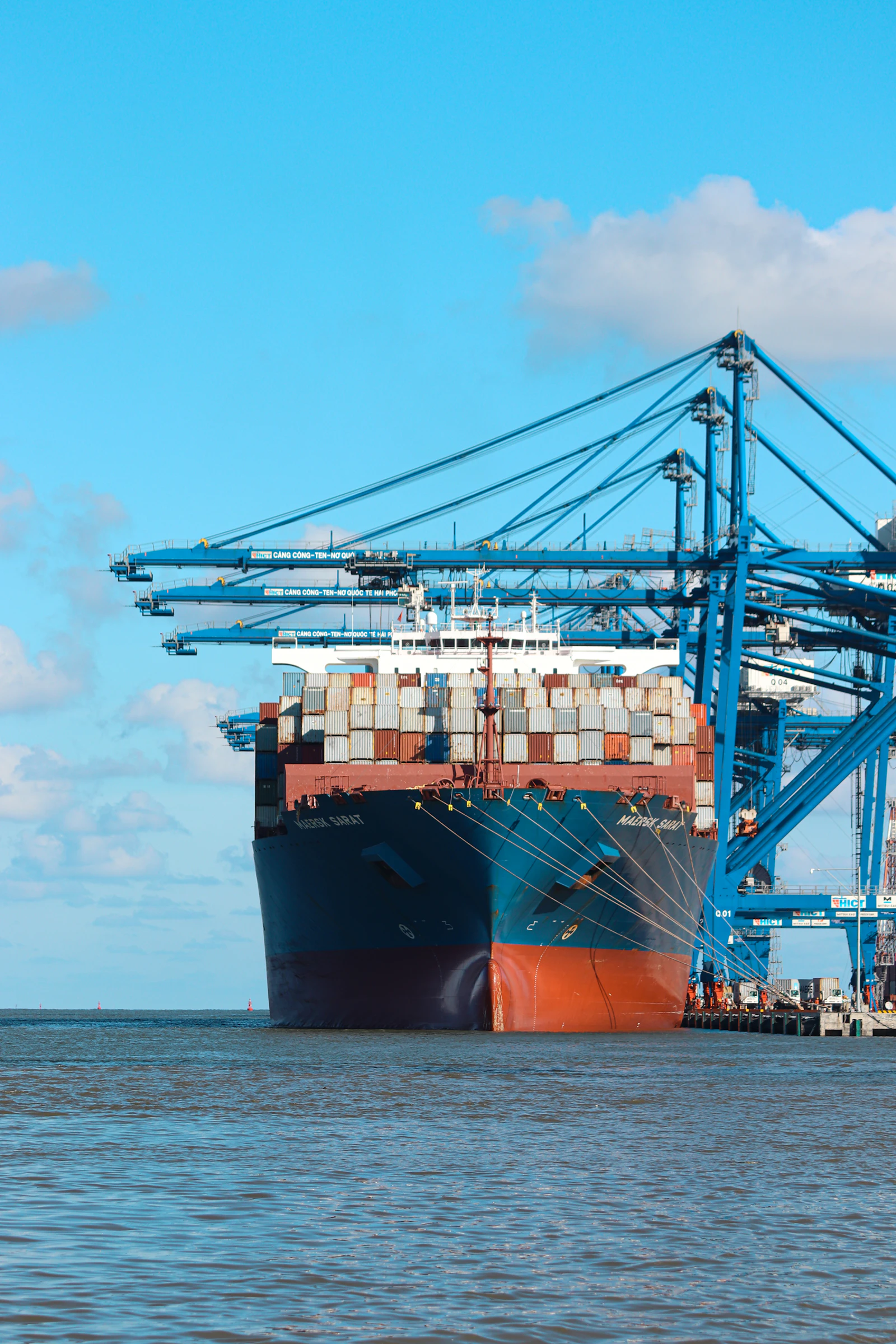
Most country PESTELs on Canada could have been written in 2015 and reprinted every year since: stable parliamentary democracy, resource-rich open economy, high immigration, multicultural society, strong rule of law, ambitious climate policy. Every clause in that sentence is either now wrong or has been materially reversed. The population is falling. The consumer carbon tax has been repealed. The oil and gas emissions cap has been abandoned. And on 21 August 2026 the trade relationship the entire "open economy" claim rests on stopped functioning.
PESTEL scans six external macro forces — Political, Economic, Social, Technological, Environmental, Legal — around an entity. Run on Canada in late August 2026, it produces a shape that is different from the one-force concentration visible in the United States: not one cell carrying the others, but one cell rewriting the others. Four of Canada's six forces have had a major federal policy withdrawn from them in the last eighteen months, and the withdrawals point the same direction.
Position being analyzed
The decision this analysis is built for: should a firm treat current Canadian federal policy as a stable planning baseline for the next three to five years? That is the question a market-entry, capital-allocation, or supply-chain decision actually turns on, and it is the question the standard "politically stable country" boilerplate answers wrongly.
| Indicator | Latest reading | As of |
|---|---|---|
| Real GDP, quarterly | 0.0% (Q1 2026), after -0.2% in Q4 2025 | 29 May 2026 |
| Bank of Canada policy rate | 2.25% — sixth consecutive hold | 15 Jul 2026 |
| CPI, year over year | 3.0% (2.2% excluding gasoline) | 17 Aug 2026 |
| Unemployment rate | 6.4% — lowest since July 2024 | 7 Aug 2026 |
| Population | 41,417,056, down 55,025 (-0.1%) in the quarter | 17 Jun 2026 |
| Merchandise exports | $77.5B in June — a record month | 4 Aug 2026 |
| US tariff action | 50% on ~$28B of Canadian goods | 21 Aug 2026 |
| CAD per USD | 1.3760 | 21 Aug 2026 |
Two things in that table are in obvious tension: record exports and a 50% tariff wall. That tension is roughly the whole analysis — the June export record predates the August rupture, and the question is which number describes 2027.
Political — the force that is rewriting the other five
Canada is governed by Prime Minister Mark Carney's Liberals, who reached a majority in April 2026 through by-election wins and floor crossings. Domestic political stability, in the conventional sense, is high. It is also almost irrelevant to the Political cell, because the binding political constraint on Canada is not made in Ottawa.
Two events define it:
The USMCA joint review, 1 July 2026. The United States declined to renew the agreement in its current form. The precise USTR language was that "the United States did not agree to renew the USMCA in its current form. As a result, the USMCA is not renewed." This is widely misread as termination. It is not — under Article 34.7, the agreement still runs its 16-year term to 1 July 2036, and declining extension instead triggers annual joint reviews until the parties agree otherwise. The practical effect is worse than it sounds and better than the headlines: North American trade rules are intact, but their planning horizon has gone from eleven years to one.
The negotiation collapse, 21 August 2026. Carney suspended talks and recalled Canada's negotiators, citing "last-minute changes in the U.S. proposed terms" that were "unfair, uneconomic, and called into question the reliability of any deal." The US moved to impose 50% tariffs on approximately $28 billion of Canadian goods, effective that midnight. (News coverage generally cites a $20 billion scope; the figure above is from the Prime Minister's own statement — worth noting the discrepancy rather than picking one silently.) Canada's response, announced the following day: dollar-for-dollar matching tariffs on steel, dairy, appliances, agricultural equipment, pulp and paper and electronics, effective the Tuesday after Labour Day — 8 September 2026.
For a PESTEL, the important property of this cell is not its severity but its transmission. Canadian federal fiscal policy, energy policy, digital taxation and broadcast regulation have all moved in the last eighteen months in ways that are legible only as responses to this relationship. That is what the Reversal Test below counts.
Economic — stalled, not shrinking, with investment as the tell
The headline growth numbers are weak but not alarming. Real GDP was unchanged at 0.0% in Q1 2026 after a 0.2% contraction in Q4 2025. Monthly data improved through the spring — GDP rose 0.3% in May with an advance estimate of 0.2% for June, and industry-side data pointed to roughly 0.8% growth in Q2. The Bank of Canada's July projection puts 2026 growth at 0.7%, recovering to 1.8% in 2027 and 2028.
Inflation is the reason the Bank has stopped cutting. CPI rose 3.0% year over year in July, up from 2.8% in June, driven almost entirely by gasoline at +25.7%. Excluding gasoline, inflation was 2.2% for a third consecutive month, and shelter inflation was just 1.3%. The Bank has held at 2.25% for six consecutive decisions, with the next scheduled for 2 September 2026.
The labour market is the surprise: unemployment fell to 6.4% in July, a third consecutive monthly decline and the lowest since July 2024, on employment growth of 75,000. Note the interaction with the Social cell — an unemployment rate can fall because employment rose or because the labour force shrank, and Canada is currently doing both.
The number that actually carries information about the trade rupture is business capital investment, which fell 0.7% in Q1 2026 for a fifth consecutive quarterly decline. Interest rates have come down substantially; investment kept falling anyway. That is the signature of uncertainty rather than cost of capital, and it was already true four months before the August collapse.
Social — a country that has stopped growing
This is the cell where Canada has genuinely changed character, and most PESTELs on Canada still describe the opposite.
Canada's population fell by 55,025 (-0.1%) in Q1 2026 to 41,417,056 — a third consecutive quarterly decline. The mechanism is deliberate: non-permanent residents fell by 117,879 (-4.4%) in the quarter to 2,558,562, and permanent resident admissions fell 20.2% year over year to 83,149. This follows the 2026-2028 Immigration Levels Plan, which holds permanent admissions at 380,000 per year — roughly 20% below the 484,000 admitted in 2024.
Underneath the policy number is a structural one that gets almost no coverage: natural increase in Q1 2026 was -155. More deaths than births. Canada has no organic population growth. Every unit of labour force expansion from here is an immigration policy decision, which means a lever that used to be a growth accelerator is now the entire growth mechanism.
Housing, the pressure that drove the immigration cuts, has responded — modestly. The national average home price was $674,819 in July 2026, up just 0.2% year over year, with the MLS Home Price Index down 3.3% year over year. Flat nominal prices against 3.0% CPI is a real-terms decline of roughly 3%. It is affordability improvement by stagnation, not by supply.
Technological — a large strategy against a thin research base
Canada launched AI for All, a five-year national AI strategy, on 4 June 2026. Its stated targets: an additional $200 billion of economic growth and 250,000 new AI-related jobs over five years, and raising AI adoption from "just over 12%" today to 60% by 2034. It is backed by the Canadian Sovereign AI Compute Strategy, a roughly $2 billion five-year commitment covering compute access, infrastructure build, and public supercomputing.
The strategy should be read against the base it starts from. Canada's R&D intensity was 1.81% of GDP in 2022, against an OECD average of 2.73% — the most recent intensity ratio Statistics Canada has published in that comparison. Getting adoption from 12% to 60% is not primarily a compute problem; it is a business-investment problem, and business investment has declined for five straight quarters.
This cell also contains the clearest single instance of the reversal pattern. Canada's 3% digital services tax — a genuine revenue measure and a genuine US irritant — was rescinded, retroactively, with the CRA required to refund all payments with interest. The original announcement, in June 2025, was explicitly made in anticipation of a trade arrangement with the United States. That arrangement is the one that collapsed on 21 August.
Legal — a regulatory retreat, and a vacuum where AI law should be
Two threads matter, and they run opposite ways.
Broadcast and streaming regulation is being dismantled mid-flight. On 21 May 2026 the CRTC issued regulations requiring streaming services to contribute 15% of annual Canadian revenues. On 3 June the responsible Minister directed the CRTC to review that decision. Then, in a letter to the Federal Court of Appeal dated 17 July 2026, the Department of Justice advised that "the Government's intention is to eliminate the base contribution requirement on streaming services and to provide government funding to replace those contributions." Under two months from regulation to abandonment. The Online Streaming Act has been identified by USTR as a services trade barrier and a USMCA-review topic — the timing is not incidental.
Privacy and AI law is a vacuum. Bill C-27 died on prorogation in January 2025, taking the Consumer Privacy Protection Act and the Artificial Intelligence and Data Act with it. Canada continues to operate under PIPEDA, enacted in 2000, with no federal AI statute in force. The AI for All strategy promises new legislation; as of late August 2026 no successor bill has been confirmed as tabled. For a firm deploying AI systems in Canada, the planning-relevant fact is that the rules do not exist yet and will not be grandfathered.
Environmental — systematically de-risked
Canada's climate policy in 2026 is the most-changed cell relative to any pre-2025 description, and it moved in one direction.
- Consumer carbon pricing: gone. Fuel charge rates were set to zero effective 1 April 2025, and Bill C-4 received royal assent on 12 March 2026, repealing Part 1 of the Greenhouse Gas Pollution Pricing Act.
- Industrial carbon pricing: softened, not removed. A new federal trajectory took effect 15 May 2026: $95/tonne in 2026, $100 in 2027, $115 in 2030, $130 in 2035. The 2021 pan-Canadian schedule had 2030 at $170. Roughly a third of the 2030 stringency was removed.
- Oil and gas emissions cap: abandoned. The 27 November 2025 Canada-Alberta memorandum of understanding states that "Canada will not implement the Oil and Gas Emissions Cap." Note the precise status: the federal government has committed not to implement it, and the draft regulations were never finalized — this is a political commitment, not a completed repeal.
- Export capacity: expanding. On 2 July 2026 Canada and Alberta advanced a proposed one-million-barrel-per-day west coast pipeline, with Pembina as private investor and Trans Mountain Corporation leading development, alongside the Pathways carbon capture project targeting 16 million tonnes per year of reductions.
The physical environment, meanwhile, is having a comparatively better year. As of 18 August 2026 Canada had recorded 4,793 wildfires and 4.1 million hectares burned — more fires than by the same date in 2025 (4,584) but far less area burned (7.7 million hectares), and below the five-year average.
The strategic read: Canada has decided that carbon policy is a competitiveness variable rather than a fixed constraint, and is trading emissions stringency for export capacity. Anyone modelling Canadian energy or heavy industry on the 2021 policy schedule is modelling a country that no longer exists.
PESTEL scorecard for Canada, August 2026
| Force | Direction | Strength | What would flip it |
|---|---|---|---|
| Political | Sharply negative | Dominant | A resumed negotiation before the 8 Sept retaliation date; or a USMCA extension agreed at a future annual review |
| Economic | Weakly negative | Moderate | Q2 GDP printing at or above the ~0.8% industry-side estimate, plus business investment ending its five-quarter decline |
| Social | Negative, structural | Moderate | An upward revision to immigration levels — the only available lever, since natural increase is negative |
| Technological | Positive, unproven | Low so far | Business investment turning, which is what converts an adoption target into adoption |
| Environmental | Positive for industry | Moderate | A federal reversal back toward stringency, or Alberta's frozen industrial price colliding with the TIER recognition commitment |
| Legal | Mixed | Low | A successor privacy/AI bill actually tabled; a final decision on streaming contributions |
The Reversal Test
Most country PESTELs count what a government has introduced. That biases the scan toward whichever party is in power and toward whatever was announced most recently. The more informative count is the opposite one.
The Reversal Test. When scanning a country, count the significant policies withdrawn, repealed, suspended, or abandoned during the scan window. A high reversal count concentrated in a short period means the country's policy environment is being set, at least partly, outside its own borders — which means Political is not one of six independent forces. It is the channel through which an external force reaches the other five. Treat every remaining policy in the scan as provisional at the same rate.
Canada's count, over the eighteen months to August 2026:
| Date | Policy withdrawn | PESTEL force | Proximate driver |
|---|---|---|---|
| 1 Apr 2025 | Consumer carbon fuel charge zeroed (repealed by Bill C-4, 12 Mar 2026) | Environmental | Affordability |
| 29 Jun 2025 → 26 Mar 2026 | Digital services tax rescinded, retroactively, with refunds plus interest | Legal / Technological | US trade |
| 27 Nov 2025 | Oil and gas emissions cap — commitment not to implement | Environmental | Energy competitiveness |
| 2026–2028 plan | Permanent resident admissions cut to 380,000/yr, ~20% below 2024 | Social | Housing and services |
| 14 Apr 2026 | Federal fuel excise tax suspended through 7 Sept 2026 | Economic | Affordability |
| 15 May 2026 | Industrial carbon price for 2030 cut from $170 to $115/tonne | Environmental | Industrial competitiveness |
| 17 Jul 2026 | Online Streaming Act base contribution to be eliminated | Legal | US trade |
Seven reversals, spanning four of the six PESTEL forces. Three trace directly or indirectly to the trade relationship; the rest trace to cost-of-living and competitiveness pressures that the same relationship intensifies.
The finding that makes this diagnostic worth running, rather than merely descriptive: the reversals did not buy the deal. The digital services tax was rescinded in explicit anticipation of a US trade arrangement. The streaming levy — a named USTR irritant — was abandoned in July. Six weeks later, on 21 August, the negotiation collapsed and 50% tariffs landed anyway. A planner who had treated each withdrawal as a de-risking event would have concluded the relationship was stabilising, right up to the point it broke.
That is the practical output. It is not that reversals are bad policy — several are defensible on their own terms. It is that a high reversal count is a measure of how little the current policy baseline predicts the future one, and it should be applied symmetrically: the same volatility that removed the carbon tax and the DST can remove the AI strategy, the immigration plan, and the pipeline commitment.
Counter-argument: isn't this just responsive government?
The strongest objection is that a democracy adjusting policy in the face of a tariff war and an affordability crisis is functioning correctly, and that calling it "reversal" smuggles in a judgement. Fair — and the test is deliberately built to avoid that judgement. It does not ask whether each reversal was correct. It asks how many there were.
The second objection is more serious: seven items in eighteen months might simply reflect a change of government, with a new Prime Minister clearing out a predecessor's agenda. That is partly true and it does not rescue the baseline. Whether volatility comes from external pressure or from a transition, the planning implication is identical — the policy in force today is a poor predictor of the policy in force in 2029. And two of the seven (the streaming contribution and the industrial price trajectory) reverse decisions made by this government, some within two months of being issued.
The honest limitation: the Reversal Test is a one-sided count. It has no denominator. A country that introduces thirty policies and withdraws seven is in a different position from one that introduces seven and withdraws seven, and this analysis does not build the introduction column. Read it as a volatility indicator, not as a direction-of-travel indicator.
Key takeaway
Canada in August 2026 fails the "stable planning baseline" test that most country PESTELs implicitly grant it — not because its institutions are unstable, but because its policy is being reset from outside. The Political cell is not one of six forces; it is the transmission channel, and the evidence is that four of the other five cells have had a major federal policy removed from them in eighteen months.
For a firm making a three-to-five-year Canadian commitment, the operational conclusion is specific: anchor the decision on things the Reversal Test cannot touch — geography, resource endowment, the existing installed base, and the physical export infrastructure now being built — and treat carbon pricing, immigration levels, digital taxation, and sector-specific levies as provisional inputs with roughly an eighteen-month half-life. The two dates that will most cheaply update this analysis are 28 August 2026, when Statistics Canada publishes Q2 GDP, and 8 September 2026, when Canada's retaliatory tariffs are scheduled to take effect.
Want to run a PESTEL on your own market? Framework for iPhone & iPad ships a PESTEL worksheet with all six forces and AI assistance for the scan.
Want to go deeper
- PESTEL framework — the six forces, and how to score them
- How to do a PESTEL analysis — the step-by-step method
- PESTEL analysis of the USA (2026) — the same scan on Canada's counterparty, with a different pathology
- PESTEL analysis of France (2026) — the inverse finding, and the Ballast Test: instability confined to the cells that route through parliament
- PESTEL analysis of Germany (2026) — the Disbursement Gap: six cells with enacted policy and a €500bn fund running at 28% of its own 2026 schedule
- PESTEL analysis of the European Union (2026) — six cells governed by different governments, and the Competence Test: score each cell only at the level that holds the lever
- PESTEL analysis of China (2026) — six cells that each return two readings with opposite signs, and the Two-Ledger Test: score the production reading and the household reading separately and route each to the decision it governs
- PESTEL analysis of Mexico (2026) — the other USMCA partner after the 1 July non-renewal, and the Entrant Test: score each cell for a firm already operating there and for one deciding whether to arrive
- PESTEL vs Porter's Five Forces — when the macro scan is the wrong tool
- PESTEL analysis of the 2026 World Cup host economy — Canada as a co-host, at the event level
Cover photo: Nathan Cima on Unsplash.
Sources
- Prime Minister of Canada — "Statement by Prime Minister Carney on Canada-U.S. trade negotiations" (21 August 2026)
- Prime Minister of Canada — "Prime Minister Carney delivers remarks on Canada-U.S. trade negotiations" (22 August 2026)
- NPR — "As Canada readies retaliatory tariffs, Mark Carney says his nation is 'at war' with U.S."
- Thompson Hine SmarTrade — "USTR Issues Statement on Status of USMCA Review"
- White & Case — "USMCA 2026 Joint Review: United States declines to extend Agreement, triggering annual reviews"
- Bank of Canada — "Bank of Canada maintains the policy rate at 2¼%" (15 July 2026)
- Statistics Canada — "Gross domestic product, income and expenditure, first quarter 2026"
- Statistics Canada — "Gross domestic product by industry, May 2026"
- Statistics Canada — "Consumer Price Index, July 2026"
- Statistics Canada — "Labour Force Survey, July 2026"
- Statistics Canada — "Canadian international merchandise trade, June 2026"
- Statistics Canada — "Canada's population estimates, first quarter 2026"
- Parliamentary Budget Officer — "Demographic Implications of the 2026-2028 Immigration Levels Plan"
- Canadian Real Estate Association — "National Statistics" (July 2026 release)
- Bank of Canada — "Daily exchange rates"
- Prime Minister of Canada — "Prime Minister Carney launches AI for All: Canada's new national artificial intelligence strategy" (4 June 2026)
- Innovation, Science and Economic Development Canada — "Canadian Sovereign AI Compute Strategy"
- Statistics Canada — "Gross domestic expenditures on research and development, 2022 (final), 2023 (preliminary) and 2024 (intentions)"
- PwC Canada — "Tax Insights: Canada intends to rescind its Digital Services Tax Act"
- Michael Geist — "Starting Over: Court Filing Confirms the CRTC's Streamer Contribution Decisions Are Dead"
- IAPP — "What 2026 may bring for Canada's privacy reform efforts"
- Parliament of Canada — "Bill C-4 (45-1), Making Life More Affordable for Canadians Act — Royal Assent"
- International Carbon Action Partnership — "Canada publishes new carbon price trajectory" (19 May 2026)
- Prime Minister of Canada — "Canada-Alberta Memorandum of Understanding" (27 November 2025)
- Prime Minister of Canada — "Canada and Alberta advance west coast pipeline project proposal and Pathways Project Carbon Capture Initiative" (2 July 2026)
- Government of Canada — "The Government of Canada provides an update regarding the 2026 wildfire season – August update"
- Canada Energy Regulator — "Market Snapshot: Oil pipeline throughputs remained high in 2025"
- Prime Minister of Canada — "Prime Minister Carney suspends the federal fuel excise tax on gasoline and diesel" (14 April 2026)
Frequently asked questions
What are the biggest external risks facing Canada in 2026?
Concentration in a single relationship. On 21 August 2026 Prime Minister Mark Carney suspended trade negotiations with the United States and recalled Canada's negotiators, after the US moved to impose 50% tariffs on roughly $28 billion of Canadian goods. Canada announced dollar-for-dollar retaliation on steel, dairy, appliances, agricultural equipment, pulp and paper and electronics, effective the Tuesday after Labour Day. This sits on top of the 1 July 2026 USMCA joint review, at which the United States declined to renew the agreement in its current form — which does not terminate it, but replaces a stable 16-year horizon with annual reviews. Every other force in Canada's PESTEL is downstream of this one: the fiscal capacity to support affected workers, the immigration levels that set labour supply, and the energy and carbon policy that determines what Canada can export and at what cost.
Is Canada's economy in recession in 2026?
Not on the published data, but it is close to stall speed. Real GDP was unchanged at 0.0% in Q1 2026 after contracting 0.2% in Q4 2025 — two quarters without growth, but not two quarters of contraction. Monthly data since then have been better: GDP rose 0.3% in May with an advance estimate of 0.2% for June, and Statistics Canada's industry-side data suggested the economy expanded around 0.8% in Q2. The Bank of Canada's July projection has growth at just 0.7% for 2026 before recovering to 1.8% in 2027 and 2028. The weakest component is business investment, which fell 0.7% in Q1 for a fifth consecutive quarterly decline — which is the number to watch, because it is the one that responds to trade uncertainty rather than to interest rates.
Why is Canada's population shrinking?
By policy, not by accident. Canada's population fell 55,025 (-0.1%) in Q1 2026 to 41,417,056 — a third consecutive quarterly decline. The mechanism is the temporary-resident drawdown: non-permanent residents fell by 117,879 (-4.4%) in the quarter to 2,558,562. Permanent resident admissions also fell, down 20.2% year over year to 83,149 in the quarter, consistent with the 2026-2028 Immigration Levels Plan holding admissions at 380,000 per year — roughly 20% below the 484,000 admitted in 2024. The striking detail underneath is that natural increase was -155 in Q1 2026: more deaths than births. Canada now has no organic population growth at all, which means immigration policy is not one input into labour supply — it is the only one.
Does Canada still have a carbon tax in 2026?
Not on consumers. The federal fuel charge rates were set to zero effective 1 April 2025, and Bill C-4 received royal assent on 12 March 2026, repealing Part 1 of the Greenhouse Gas Pollution Pricing Act. Industrial carbon pricing under Part 2 survives, but on a materially softer trajectory published 19 May 2026: $95/tonne in 2026 rising to $115 by 2030 and $130 by 2035. The 2030 figure is the one that moved — the previous 2021 pan-Canadian schedule had it at $170. Separately, the federal government committed in the 27 November 2025 Canada-Alberta memorandum of understanding not to implement the oil and gas emissions cap. So the correct 2026 answer is that carbon pricing in Canada still exists, applies only to large emitters, and has had roughly a third of its 2030 stringency removed.
What does PESTEL show about Canada that a SWOT does not?
PESTEL is an external-only scan, which is exactly right for a country, because a country has no 'internal' cell in the sense a company does. More usefully here, PESTEL's six-cell structure is what makes the coupling visible: it forces you to write down Political, Legal, Environmental and Social separately, and once they are side by side the pattern in Canada's 2026 scan is obvious — the same external pressure is producing withdrawals in four different cells. A SWOT would have collapsed those into one 'Threats' bullet about US trade policy and lost the structure. That structure is what the Reversal Test in this analysis counts.