
Apple PESTEL Analysis 2026
A working PESTEL analysis of Apple in 2026 — DOJ antitrust trial, China-India manufacturing pivot, Apple Intelligence rollout, EU DMA enforcement, App Store legal headwinds, and the 2030 carbon-neutrality commitment. Six macro forces shaping the next 24 months.
Apple in 2026 looks healthy on the surface. Services revenue keeps growing, the installed base keeps expanding, and the iPhone still prints cash. But the operating model that produced those numbers — a vertically integrated hardware leader monetizing a captive software ecosystem at a 30% take rate — is being attacked from six different directions at once. The PESTEL framework was built for exactly this case: a macro-environment scan that scores forces a company cannot control, in contrast to a Porter's analysis of forces within its industry.
Run cleanly on Apple in May 2026, PESTEL surfaces an awkward truth — five of the six forces are tightening, and the one that's neutral (Technological) is a coin-flip because the on-device AI bet is racing against cloud-LLM improvement curves Apple doesn't set.
Position being analyzed
Mid-2026: the DOJ App Store antitrust trial is in pre-trial motions, the EU DMA has been in active enforcement for two years, Apple Intelligence has shipped on the iPhone 16/17 line but consumer perception lags ChatGPT and Gemini, India assembly accounts for an estimated 25% of iPhone output and rising, Vision Pro is a niche product still searching for its mainstream moment, and the 2030 carbon-neutral commitment is on its hardest milestone yet (Scope 3 supply-chain emissions). The strategic question PESTEL helps with: which macro force is most likely to bend Apple's 2027–2028 trajectory?
| Metric | Value | Direction vs. 12 months ago |
|---|---|---|
| Services revenue / YoY growth | ~$26B/Q / +13% | Stable from +14% |
| iPhone revenue / YoY growth | ~$70B/Q / +2% | Down from +6% |
| Installed base (active devices) | 2.3B+ | Up from ~2.2B |
| India share of iPhone assembly | ~25% | Up from ~14% |
| App Store take rate (effective, post-DMA) | ~22-26% (EU); 27% (US small business) | Down from ~30% (pre-DMA EU) |
| 2030 carbon-neutral progress | Scope 1+2 ~95%; Scope 3 ~38% | Scope 3 slow |
| DOJ antitrust case stage | Pre-trial motions, trial 2027 | Advanced from filing 2024 |
PESTEL applied
Political — DOJ + US-China decoupling
The Political force is two stories braided together. The first is United States v. Apple Inc. — the DOJ's 2024 monopoly case alleging Apple uses its smartphone monopoly to suppress competition in messaging, smartwatches, and digital wallets. The trial timeline now points to 2027, which means 2026 is the "discovery + motions" year where settlement pressure is highest. A consent decree that opens up iMessage, NFC, and the App Store API would be a material change to the services margin profile.
The second is the US-China decoupling pressure on assembly. China export controls on rare earths, US tariffs on Chinese-assembled electronics, and Beijing's domestic-tech push (the "Apple ban" inside Chinese state enterprises) all push Apple to diversify. India is the relief valve, Vietnam is the secondary one, and the cost of the move is the binding constraint on speed.
Economic — slowing premium upgrade cycle, services compensating
The premium smartphone segment is mature. Consumers in developed markets are holding phones longer (4+ years average), enterprise refresh cycles have stretched, and emerging market growth slowed when prices crossed $800. iPhone revenue growth is now in the low-single-digits and is being offset by services and a quietly massive advertising business inside the App Store and Apple TV+. The risk: if services growth normalizes from +13% to high-single-digits while iPhone stagnates, the overall growth narrative gets thin.
The Vision Pro headset, still selling at roughly the rate of the original Apple Watch in year two, is the product line Apple needs to convert from R&D burden to growth driver. The 2026 question is whether Vision Pro 2 with a sub-$2,000 price reframes the category or remains a luxury demo.
Social — AI literacy moving faster than Apple's cadence
The Social force is the most uncomfortable for Apple. Consumer expectations of AI capability have been reset weekly by ChatGPT, Gemini, and Claude — every cloud LLM ships material improvements on a 4-8 week cadence. Apple's product cadence is annual. Apple Intelligence shipped strong on-device privacy properties but feels behind on the conversational capability consumers now expect, and the lag is measured in months, not quarters.
The countervailing Social force is privacy positioning, which is still genuinely strong with users who care about it (paying customers in developed markets) and a real differentiator in B2B and education channels. The brand equity hasn't moved, but it's being asked to absorb more weight.
Technological — on-device AI moat vs cloud-LLM improvement curve
The Technological force is the coin flip. Apple Silicon (M4, M5) remains the best consumer compute platform shipping today, and the neural engine plus unified memory architecture genuinely supports on-device AI that competitors can't replicate on commodity hardware. That's a durable moat.
The challenge is that the user-facing AI experience is judged against cloud models — and cloud models will always have more parameters, fresher data, and the ability to ship improvements continuously. Apple's bet is that for the majority of consumer AI tasks, on-device + private + free is sufficient. That bet is plausible but unproven. If it works, Apple owns a defensible position. If it doesn't, the iPhone becomes a thin client for someone else's model.
Environmental — Scope 3 is the binding milestone
Apple's 2030 carbon-neutral commitment is the most credible such commitment from a hyperscaler-adjacent company. Scope 1 (direct emissions) and Scope 2 (purchased electricity) are nearly complete. Scope 3 — the supply chain — is at roughly 38% and is the hard part. Aluminum smelting, chip fabrication (TSMC), and shipping account for most of what's left.
The Environmental force is also coupled to the Political and Economic forces: the India manufacturing pivot is worse for Scope 3 in the near term because grid intensity in Indian states is higher than the Chinese coastal regions Apple is moving away from. This is the kind of cross-force coupling PESTEL exists to surface.
Legal — EU DMA is the largest active legal lever
The EU Digital Markets Act has been in enforcement since 2024. Apple has been required to open the App Store to alternative payment processors, support third-party app marketplaces in the EU, and disclose self-preferencing in search rankings. The effective EU take rate has dropped from 30% to a contested 22-26% (depending on which fees survive litigation). Annual EU fines and reserves are now in the low billions of euros and rising.
The DMA matters more than the DOJ case in 2026 because it's already operative — the App Store revenue impact is hitting the books today, while the DOJ outcome is 18-24 months out. Other regions (UK, Japan, South Korea) are watching and modelling the EU approach. The Legal force compounds: every successful EU action increases the political pressure for similar action elsewhere.
Counter-argument
The bull case is straightforward: the iPhone installed base is still growing, services is still a $100B+ run-rate business with category-leading margins, and Apple Intelligence is a multi-year program that will look better in 2028 than in 2026. The DOJ case is slow and may settle on terms Apple can absorb. The DMA fines are real but bounded as a percentage of revenue. Vision Pro is early but optionality.
PESTEL doesn't refute this — it forces the question of which force compresses the bull case first. If services growth slows from 13% to 8% (a plausible Economic + Legal outcome), the headline growth story changes from "Apple is becoming a services company" to "Apple is a slow-growing services company." That re-rating is what the framework warns about.
Signals to watch (next 18 months)
| Signal | Force | Why it matters |
|---|---|---|
| DOJ settlement terms or trial start | Political/Legal | The binary outcome that re-prices the services multiple |
| EU effective take rate | Legal | Forward indicator for UK / Japan / Korea action |
| Apple Intelligence consumer NPS vs cloud LLMs | Technological/Social | Tells you if the on-device bet is converting |
| iPhone average selling price | Economic | Detects whether the upgrade cycle is reactivating |
| India assembly cost per unit | Political/Economic | The decoupling tax landing on COGS |
| Scope 3 emissions trajectory | Environmental | The 2030 commitment's binding constraint |
| Vision Pro 2 unit volume | Economic | Whether the category exists outside enthusiasts |
Key takeaway
The Apple PESTEL story isn't that any single force breaks the company. It's that five forces are tightening simultaneously, the one neutral force (Technological) is a contested bet, and the company's strategic narrative ("Apple is becoming a services company") depends on a take rate the Legal force is actively dismantling. PESTEL's contribution is the cross-force coupling view that no single industry analysis captures — and the picture it paints in May 2026 is that Apple isn't broken, but the operating model that produced the last decade's returns is being renegotiated piece by piece.
The framework doesn't tell you what Apple should do. It tells you what to watch — and the answer is that the App Store take rate is the single metric that compresses the most other forces simultaneously. If you only have time to track one number, track that one.
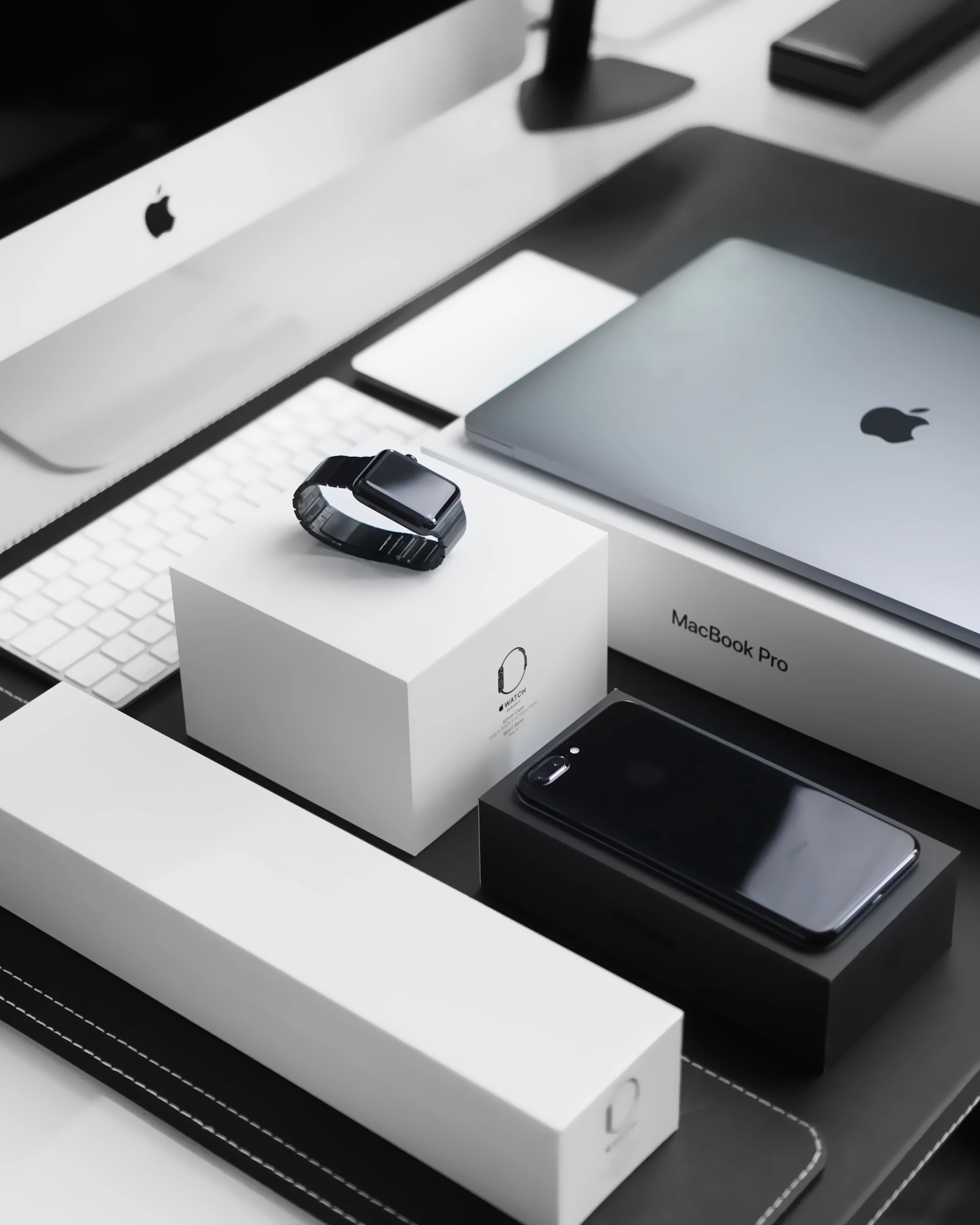
Cover photo: Laurenz Heymann on Unsplash.
Want to run PESTEL on your own market? Framework for iPhone & iPad scans all six macro factors with AI-assisted prompts and scores each one. Free to start.
Related
- How to Do a PESTEL Analysis — the 6-step method + the Materiality Filter for ranking the six forces
- PESTEL framework — the full template and quadrant definitions
- Apple McKinsey 7S Analysis 2026 — same company, internal-alignment lens; re-scored in September 2026 after the Cook → Ternus CEO change
- McKinsey 7S Framework: Hard and Soft Elements — explainer for the Hard/Soft split + the Hard-Soft Asymmetry Rule
- Amazon PESTEL Analysis 2026 — a sibling analysis where the macro forces look very different
- Nike PESTEL Analysis (2026) — a sibling analysis where one force (tariffs) dominates the whole grid
- Porter's Five Forces beginner's guide — when to use Five Forces instead of PESTEL
- Netflix Porter's Five Forces Analysis 2026 — an industry-bounded analysis for contrast
Sources
Frequently asked questions
Why PESTEL for Apple and not Five Forces?
Five Forces is an industry analysis. Apple competes in at least four industries (smartphones, smartwatches, services, headsets), and the macro forces don't respect industry boundaries — the DOJ App Store trial moves services and hardware revenue in opposite directions, EU DMA enforcement hits the marketplace differently than US antitrust hits bundling, and the China manufacturing exposure shows up as a Political risk that wraps every product line at once. PESTEL is the right tool when one company has six different macro exposures across its segments.
Which PESTEL force is the binding constraint for Apple right now?
Political and Legal are coupled and binding. The DOJ antitrust trial (Political/Legal) and EU DMA gatekeeper enforcement (Legal) together threaten the 30% App Store take rate that funds the services growth story Apple uses to offset slowing iPhone unit growth. If the take rate falls structurally below 20%, the services margin profile changes and the entire 'Apple is becoming a services company' narrative needs to be re-underwritten. Every other force matters, but this one is the immediate hinge.
Is Apple Intelligence enough to reset the upgrade cycle?
PESTEL says probably not on the timeline investors want. The Technological force is real but partial — Apple Intelligence runs on-device, which is a privacy and battery-life moat, but the consumer perception gap with ChatGPT and Gemini is widening because cloud LLMs improve weekly while on-device models improve on Apple's 12-month release cadence. The Social force (consumer expectation of AI-everywhere) is moving faster than the Technological force can deliver on Apple's terms. The upgrade cycle reset is more likely a 2027-2028 story than a 2026 one.
How does the India pivot fit into PESTEL?
Political (Chinese export controls + US tariff regime push diversification), Economic (Indian assembly is materially more expensive at scale than Chinese assembly, even after subsidy), and Legal (Indian data localization rules constrain iCloud and services). A single decision (move iPhone assembly to India) ripples across three forces simultaneously, which is exactly the kind of cross-force coupling PESTEL was designed to surface. The naive read is 'India derisks China.' The PESTEL read is 'India trades concentrated political risk for distributed economic and legal cost — and the trade gets worse before it gets better.'